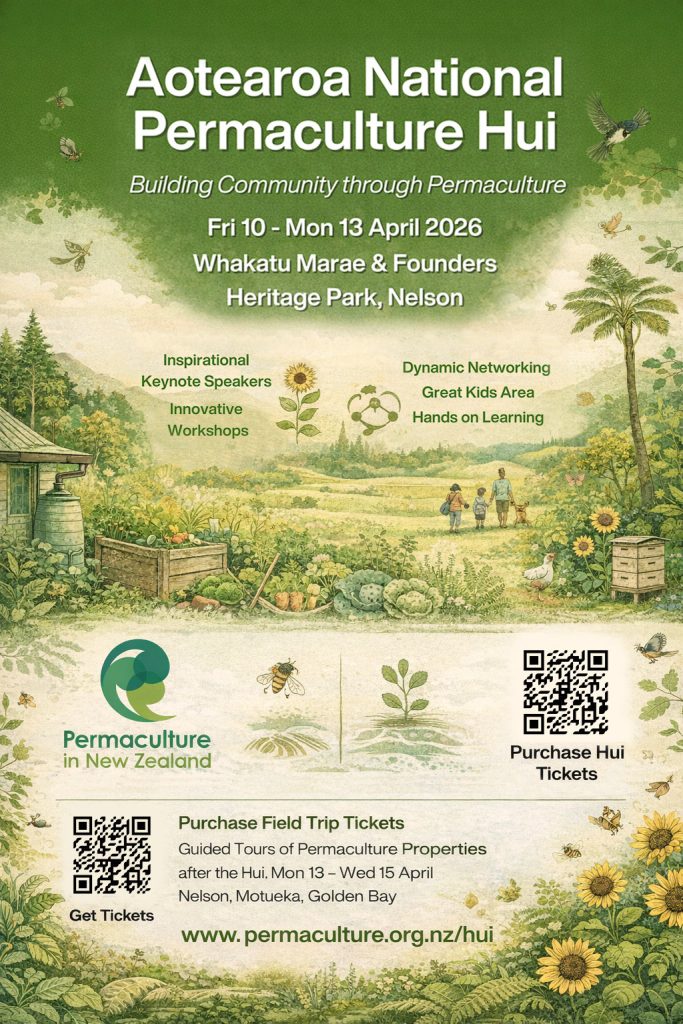
The annual hui is a vibrant showcase of permaculture in Aotearoa, shaped each year by the unique character of the host bioregion.
Organised collaboratively by the hui team and the PiNZ Council, each gathering reflects a diversity of permaculture practice, sparks timely and meaningful conversations, and strengthens the networks that support our growing community across Aotearoa.
The hui offers an inspiring and enriching experience for all participants—introducing permaculture principles and concepts, fostering connection, and welcoming newcomers into the community. It’s a valuable opportunity to build relationships with aligned individuals, groups, and networks, and to contribute to positive change within our society.
Table of Contents
2026 Nelson Hui
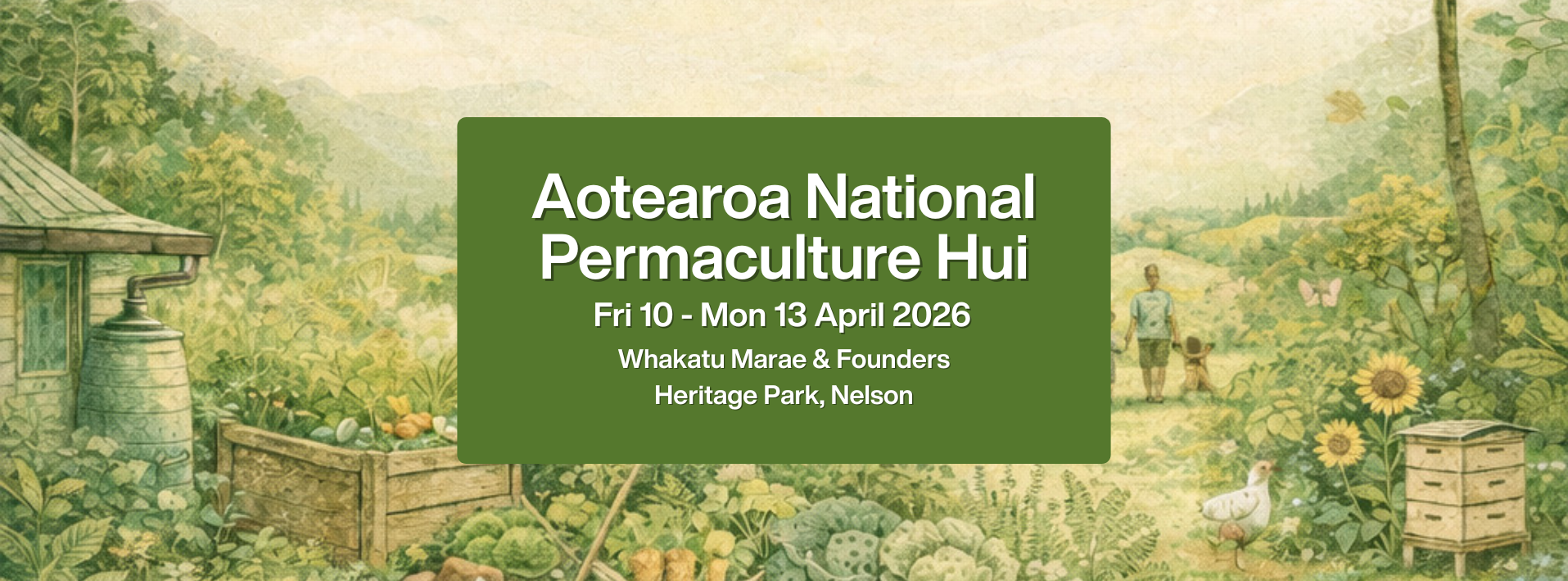
When
Friday 10th April to Monday 13th
They are in the middle of the school holidays, making it attractive for families to come – combining hui attendance with a holiday in this adventure some region. We plan on having an awesome children’s programme within the hui.
Where
Whakatui Marae (accommodation, meals, workshops), plus Founders Heritage Park neighbouring facilities (keynote speakers sessions, workshops, Sat evening social).
Travel
Read up on the various options for getting to Nelson.
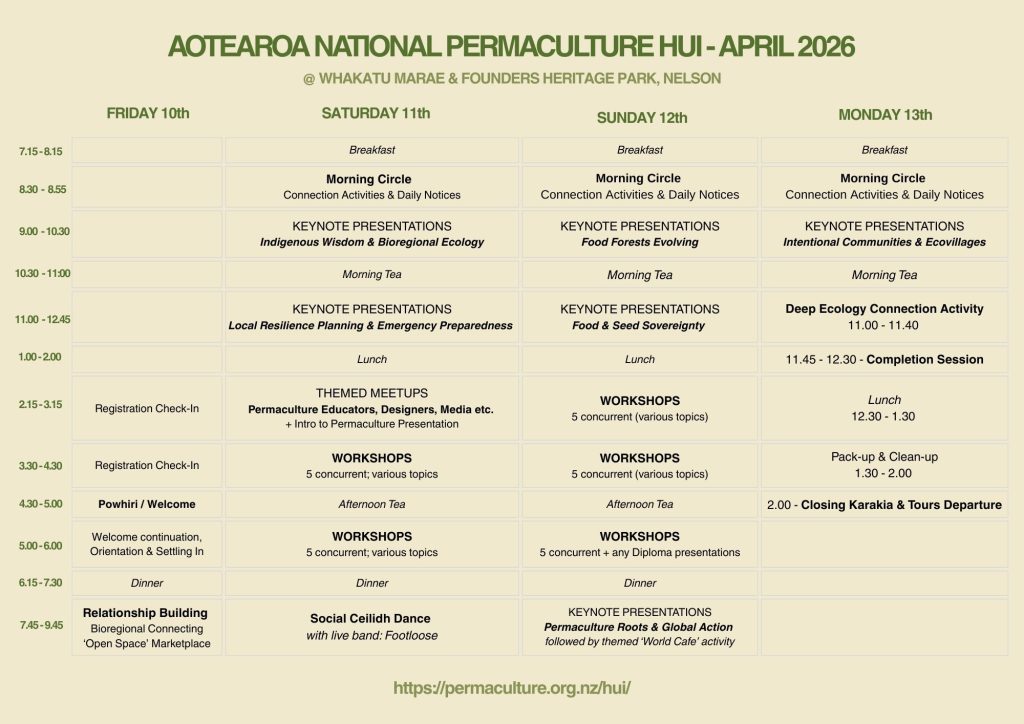
Schedule
Speakers
Kaitiakitanga – Indigenous Wisdom & Bioregional Ecology
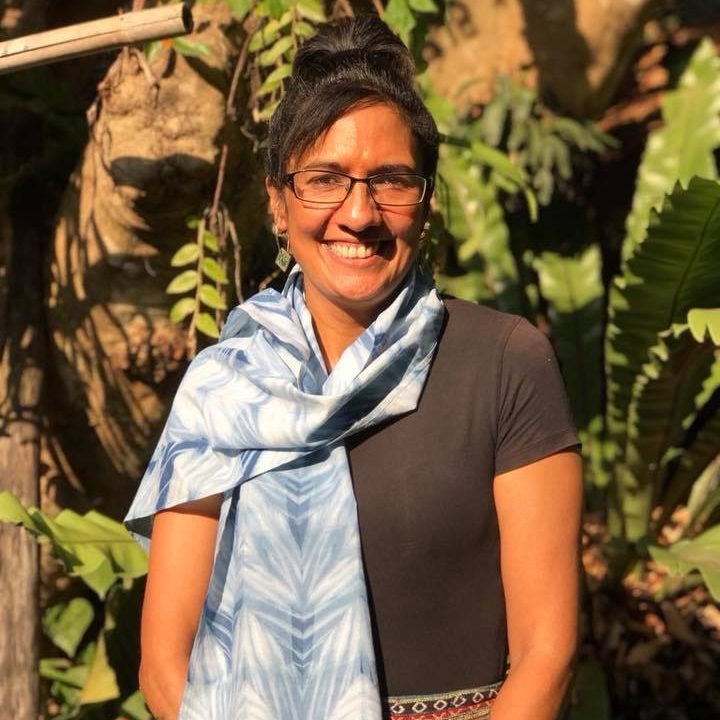
Thalea Tane
(Te Roroa, Ngāpuhi, Ngati Korokoro, Ngāti Whātua)
Thalea is passionate about creating positive change and improving the lives of others through her work as a “Connectivity Catalyst”. She recently served as Project Manager for ‘Reconnecting Northland’, where she guided projects that aim to reconnect communities and foster social cohesion whilst caretaking the environment. She has a long-standing background in governance, finance, education, community and Iwi (indigenous) development, which includes interlinking ecological, social, cultural, and economic dimensions to co-create sustainable outcomes in Aotearoa and abroad.
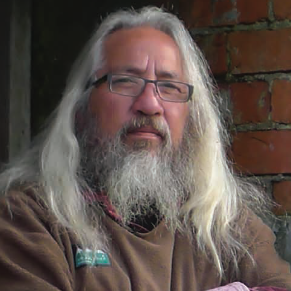
Karl Russell
(Ngāi Tahu – Ngāti Huirapa/Ngāti Ruahikihiki, Ngāti Māmoe, Waitaha)
Karl works at the forefront of natural resource and environmental management. He is a longstanding advocate of freshwater, mahinga kai, and educates farm leaders on the importance of protecting the waterways for future generations. He co-founded the Aoraki Environmental Consultancy, and was an early member of the Ashburton Water Management Zone Committee, where he pioneered a form of collaborative water governance, which included local and regional councils, industry stakeholders, Ngāi Tahu iwi and the wider community.
Bioregeional Resilience Planning & Emergency Preparedness
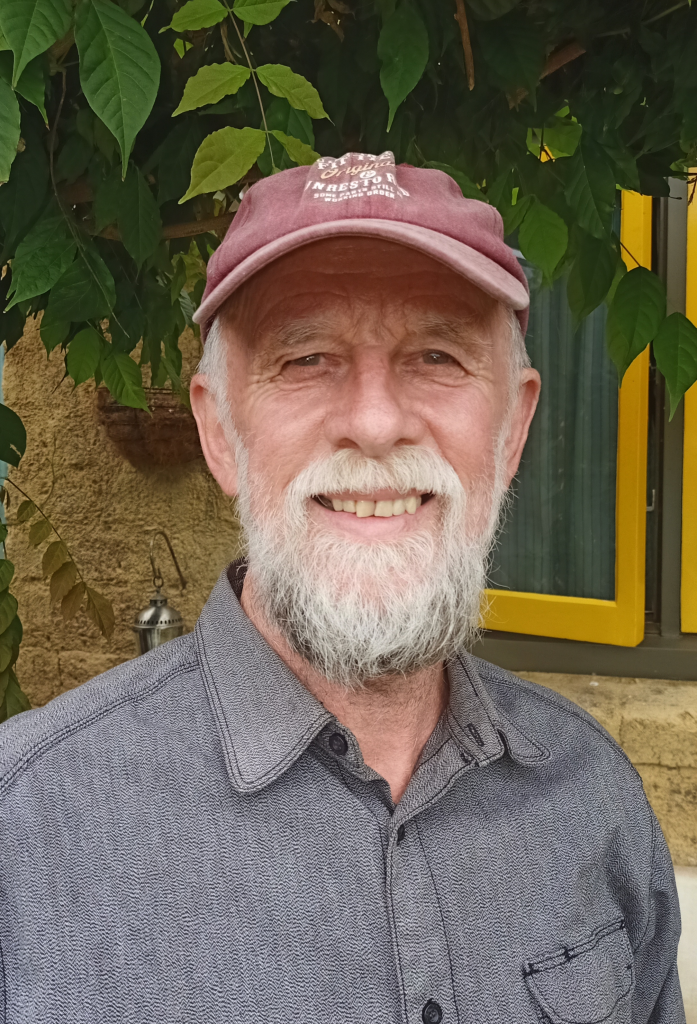
Andy Clark
Andy is known as a man who ‘walks his talk’. In the late 1970’s, he started transforming his 8ha block of ‘pakahi’ soil, scrub and swamp in Golden Bay, into a productive self-built homestead for his family. Now retired from his architectural design career, he continues to develop and maintain the property, alongside his activities as a Forestry Manager of a co-operatively owned local non-pine species forest, Chair of the Tukurua Water Supply Society and and running courses on carbon footprint assessment. Andy has always had the community at heart serving on many community organisations in the past, including as the Golden Bay Community Board Chair and Tasman District Councillor. He recently facilitated the coordination of the community emergency response for western Golden Bay, culminating in the implementation of a robust Emergency Response Plan for his community in Tukurua.
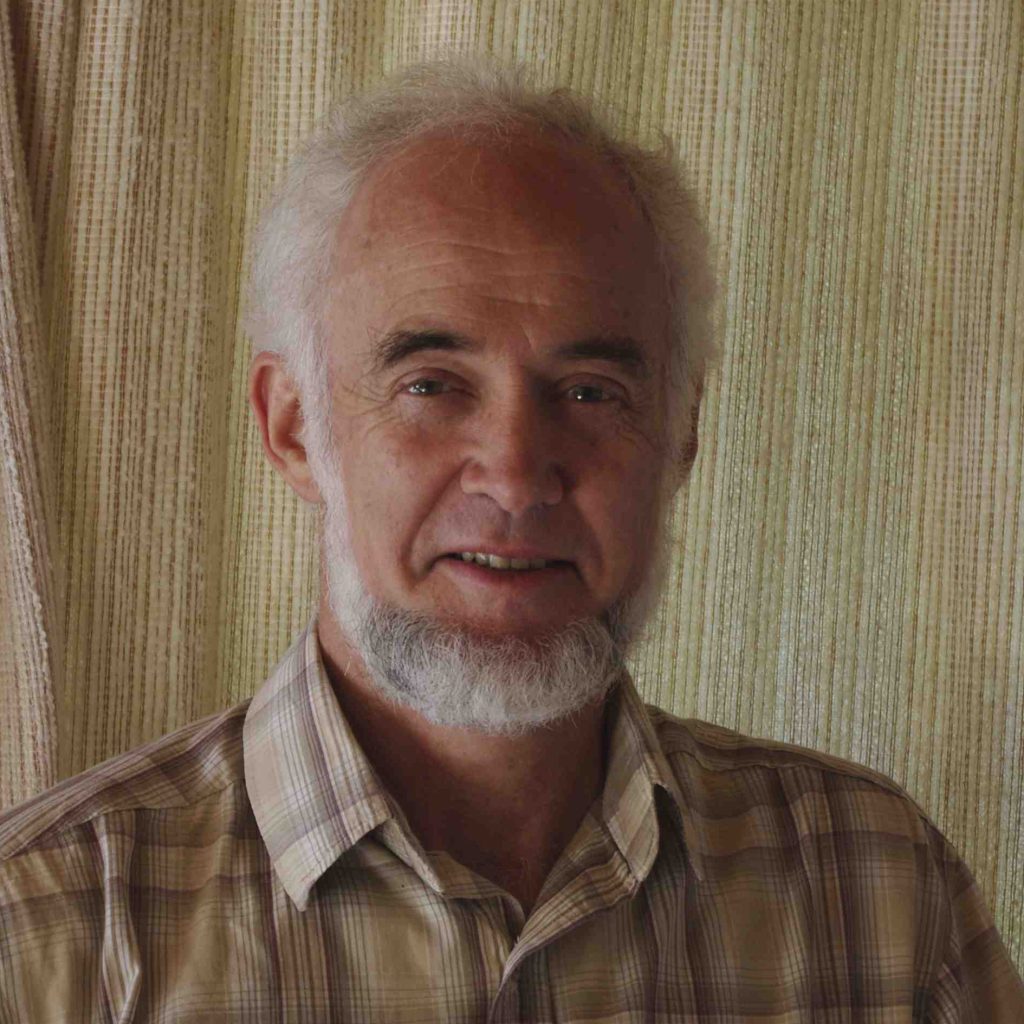
Gary Williams
Gary resides on a small mixed farm and forestry enterprise, aptly named ‘Waterscape’, where he and his partner Emily carry out a diversity of farming and forestry activities using organic management methods and biodynamic practices. Here and around the bioregion, they teach permaculture courses and host guests at their ecological farmstay. Gary works from home as a self-employed consulting engineer in the field of water and soil resource management. He was on the scene providing emergency permaculture solutions to local communities during the Christchurch earthquakes, and beyond. Gary is the author of several books on cultural transformation, alternative economics, regenerative horticulture, and about living a full life in the world we live in.
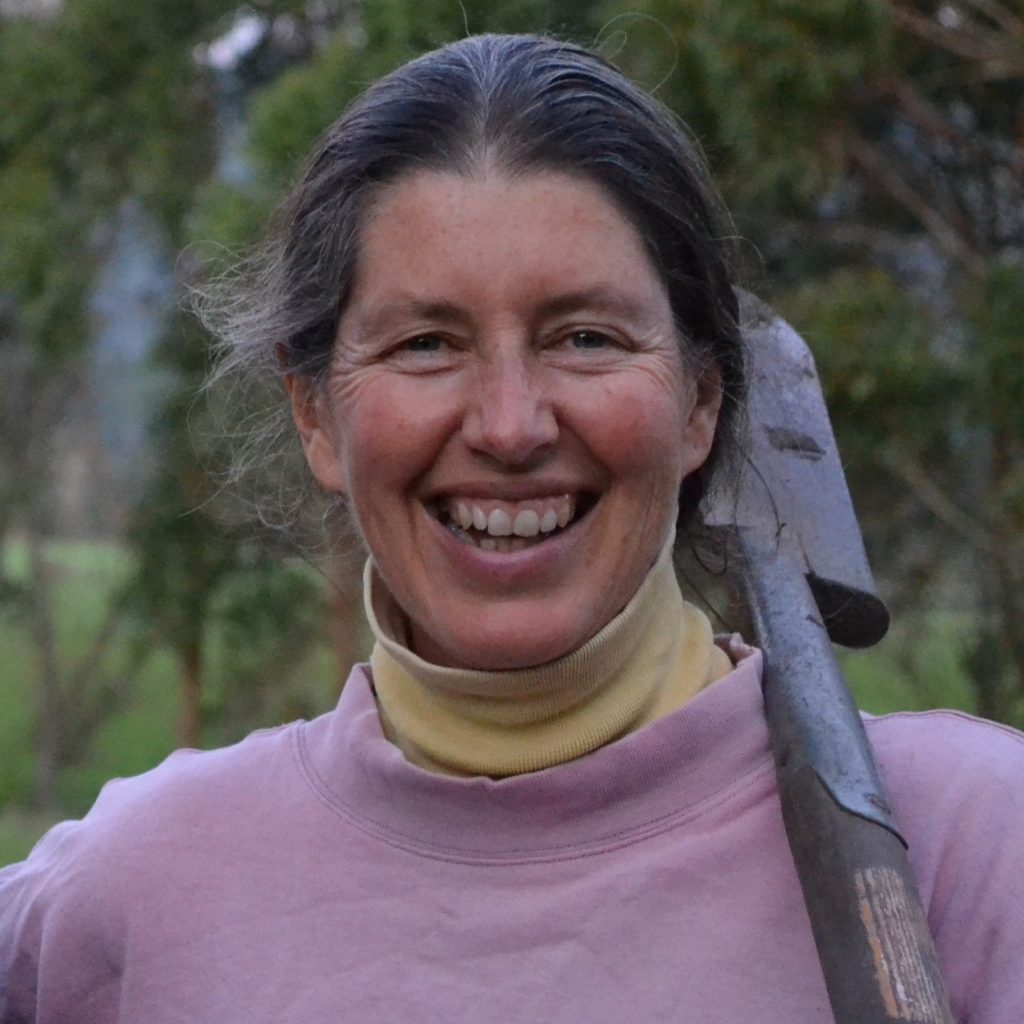
Debbie Pearson
Debbie is the Chair of ‘Mohua 2042 Charitable Trust’, a community-led bioregional trust working to support a thriving, resilient and regenerative future for Golden Bay. She is passionate about regenerative, sustainable approaches that support thriving people and ecosystems, and her immersion in the natural world and local community strongly shapes her work. With a background as a chemical engineer, herbalist, and senior leader across government and corporate sectors, Debbie brings strong systems thinking and practical leadership to community-led change.
Food & Seed Sovereignty
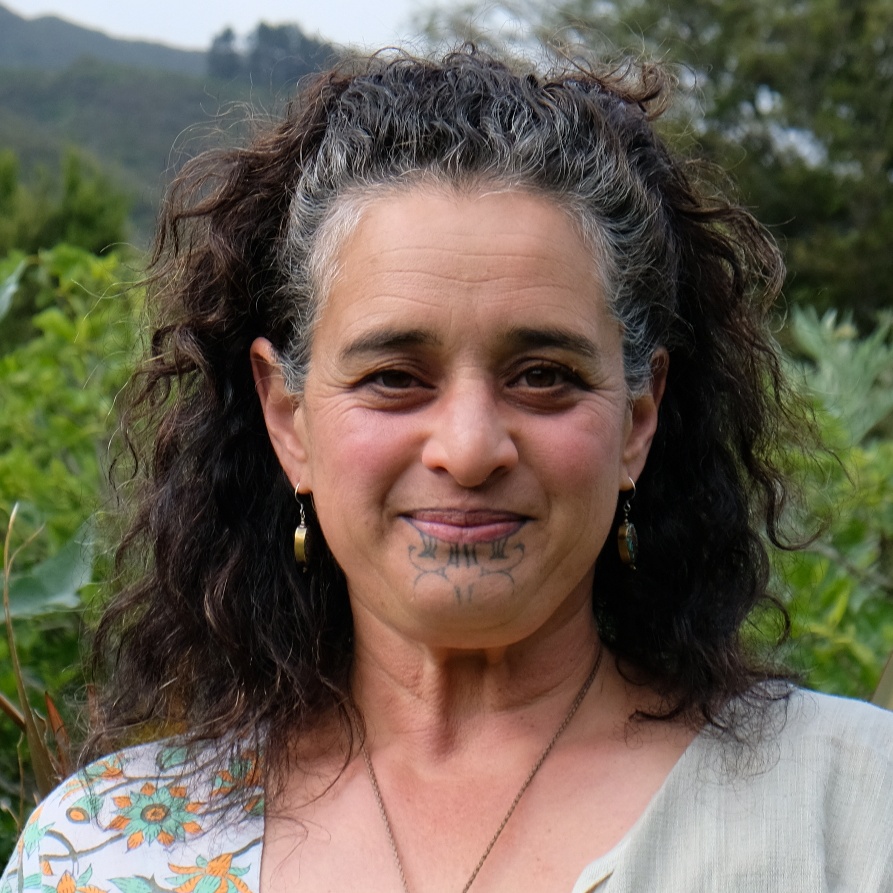
Jessica Hutchings
Jessica is a kaupapa Maori research leader trained in the fields of environmental and Indigenous studies, with a deep investment and passion to live her life in ways that uplift the wellbeing of people and the land. She was instrumental in establishing Hua Parakore, a Māori organics framework which strengthens Māori food sovereignty and self-reliance, and the world’s first Indigenous validation and verification system for Kai Atua (pure food). Jessica practices Hua Parakore principles and methodology on her small family farm in the Wellington region.
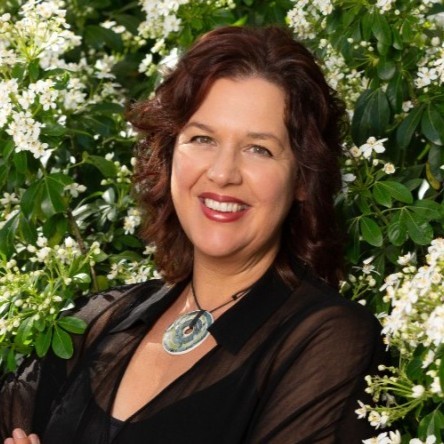
Angela Clifford
Angela and her husband Nick co-own The Food Farm in North Canterbury – beautifully depicted in their recent book, which made the shortlist of the NZ Booklover Awards. Angela leads ‘Eat New Zealand’, a 10 year old food collective that includes everyone, from farmers and fishers, to community leaders and chefs. Eat New Zealand’s mission is to be instrumental in creating a future where all New Zealanders will have access to their food in a connected way. Kai which sustains us culturally, socially and nutritionally, produced or collected in a way that supports the balance of our natural world; our land, fresh water and ocean. Permaculture design has played a major part in this not for profit movement, and it’s this application to movements and communities that Angela is keen to explore at our hui.
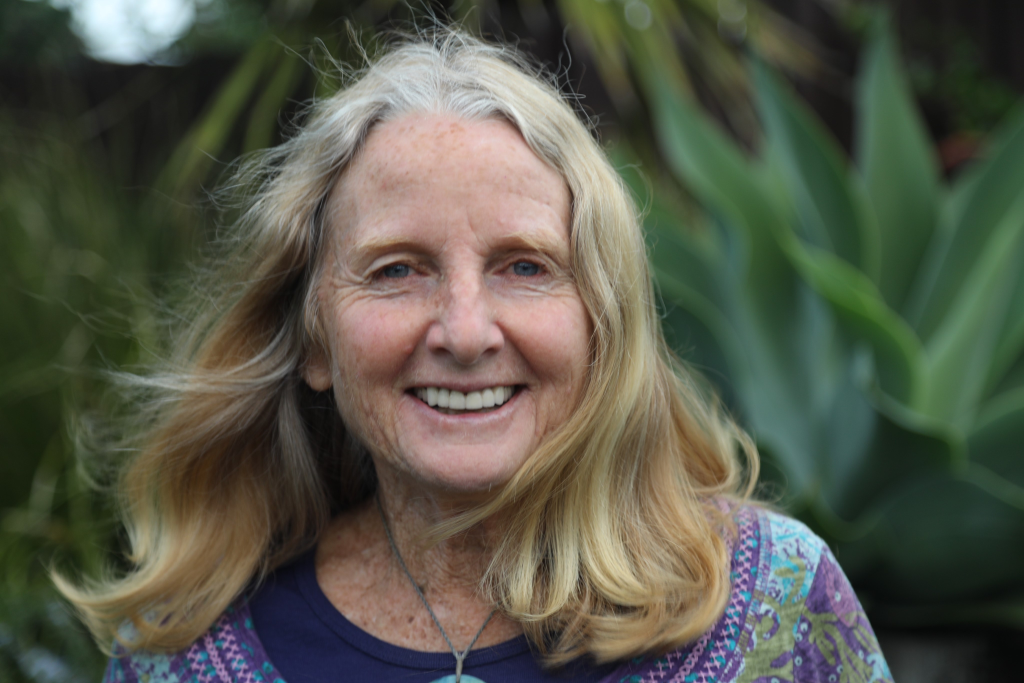
Robina McCurdy
Robina is a community development and permaculture educator, evolving her own methodology and original resource materials. She worked for several years with village-scale food security in Southern Africa, before becoming the co-ordinator of Victory Community Gardens in Nelson and consultant-educator (post-earthquake) with Project Lyttleton’s ‘Food Resilience Project’. In 2012 she founded ‘The Localising Food Project’, producing motivational documentaries and teaching workshops on home garden design, public food forests, seed security and local food action planning, up until today.
Food Forests Evolving
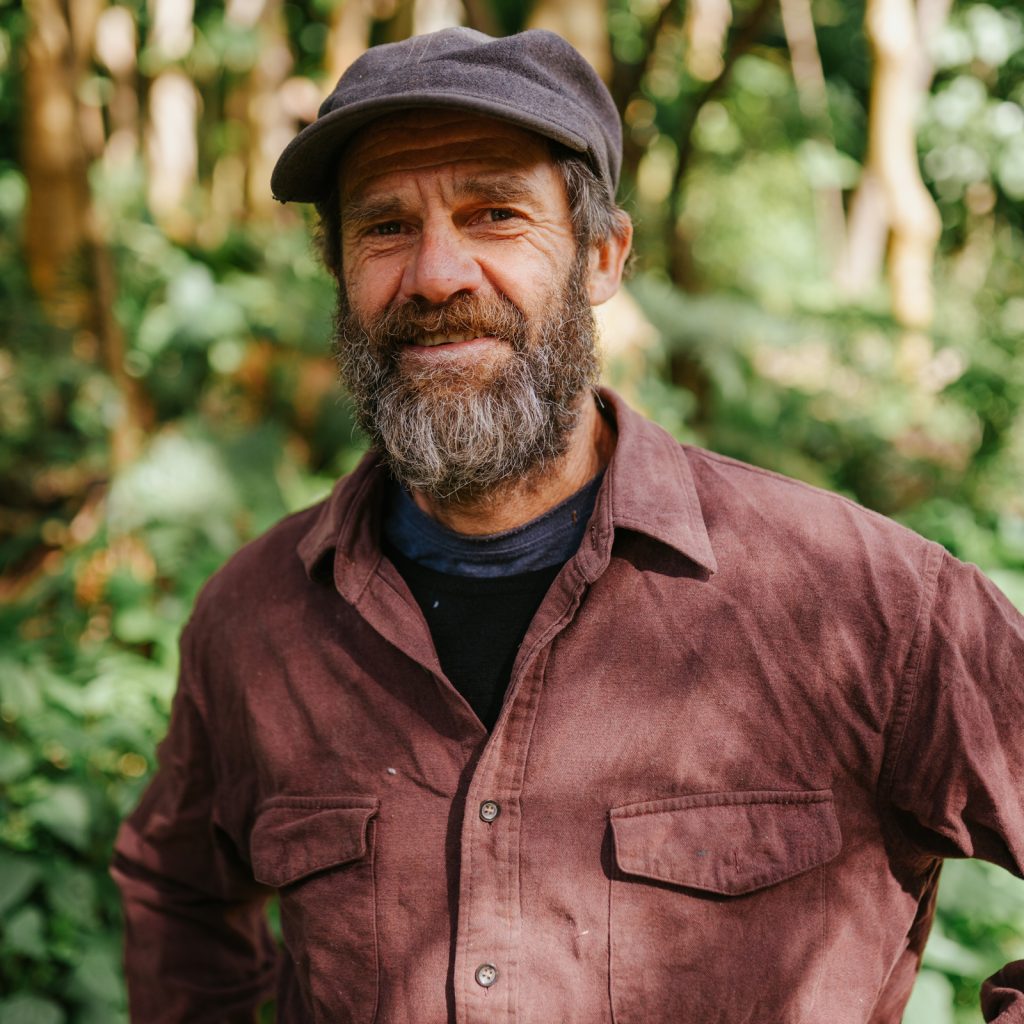
Klaus Lotz
Klaus is a syntropic agroforestry and permaculture consultant, tutor, researcher, and holistic farmer. Alongside his family of three generations, he has created PermaDynamics, a farm in New Zealand that strives to work with nature by practicing and teaching syntropic agroforestry, biodynamics, and regenerative farming practices. Klaus brings his astute observation and permaculture design skills, together with his global plant relationship knowledge, to work intuitively to restore ecological balance and build fertile soils in tandem with abundant food production.
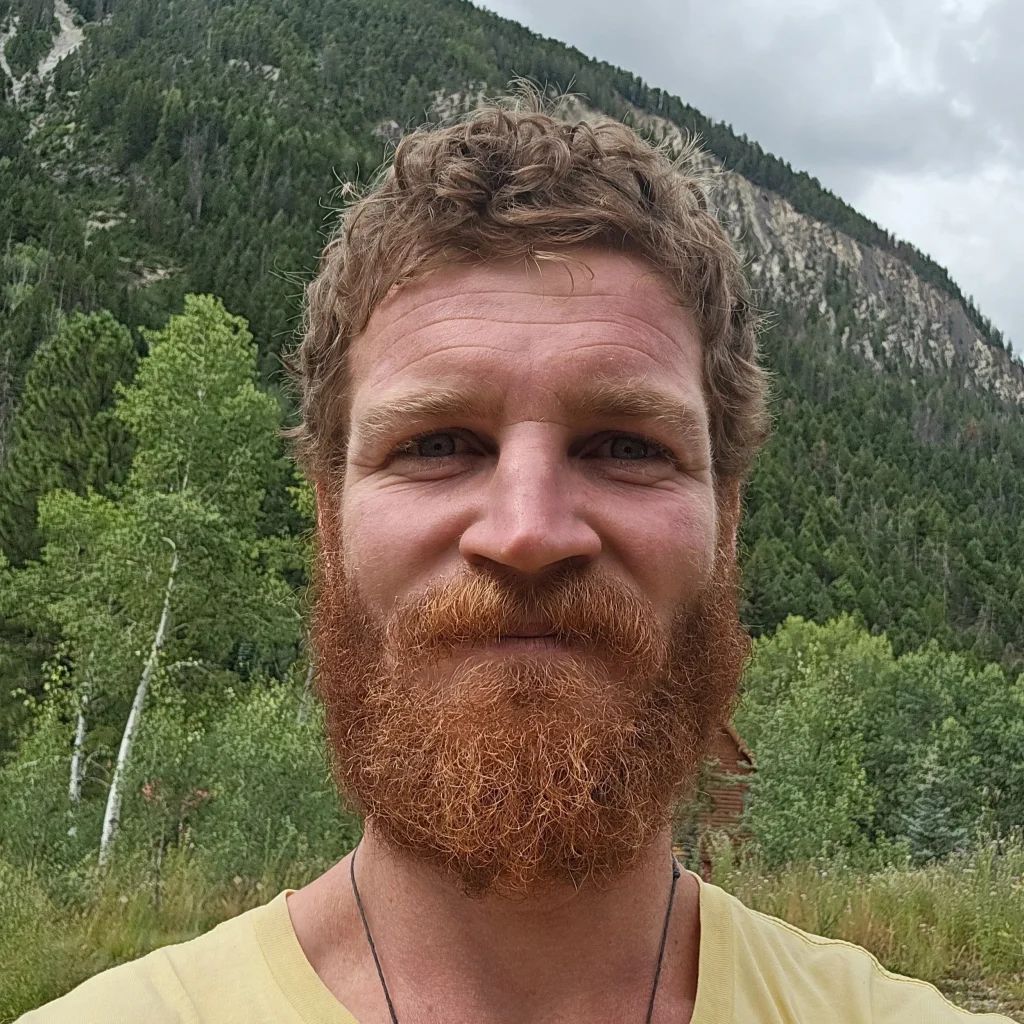
Zeb Horrell
Zeb is a regenerative land steward and community weaver, with a mission is to foster bioregional resilience and ecological awareness for future generations. After transitioning his family’s 1,000-acre sheep farm in Southland to more ecological practices, he founded the Future Whenua Collective, to support land-based solutions through education, collaboration, and events. Zeb now works as the Chief Regenerative Practitioner at Mangaroa Farms – a resilient community food hub and educational centre that integrates food forests, market gardening, native forest regeneration, and regenerative grazing practices.
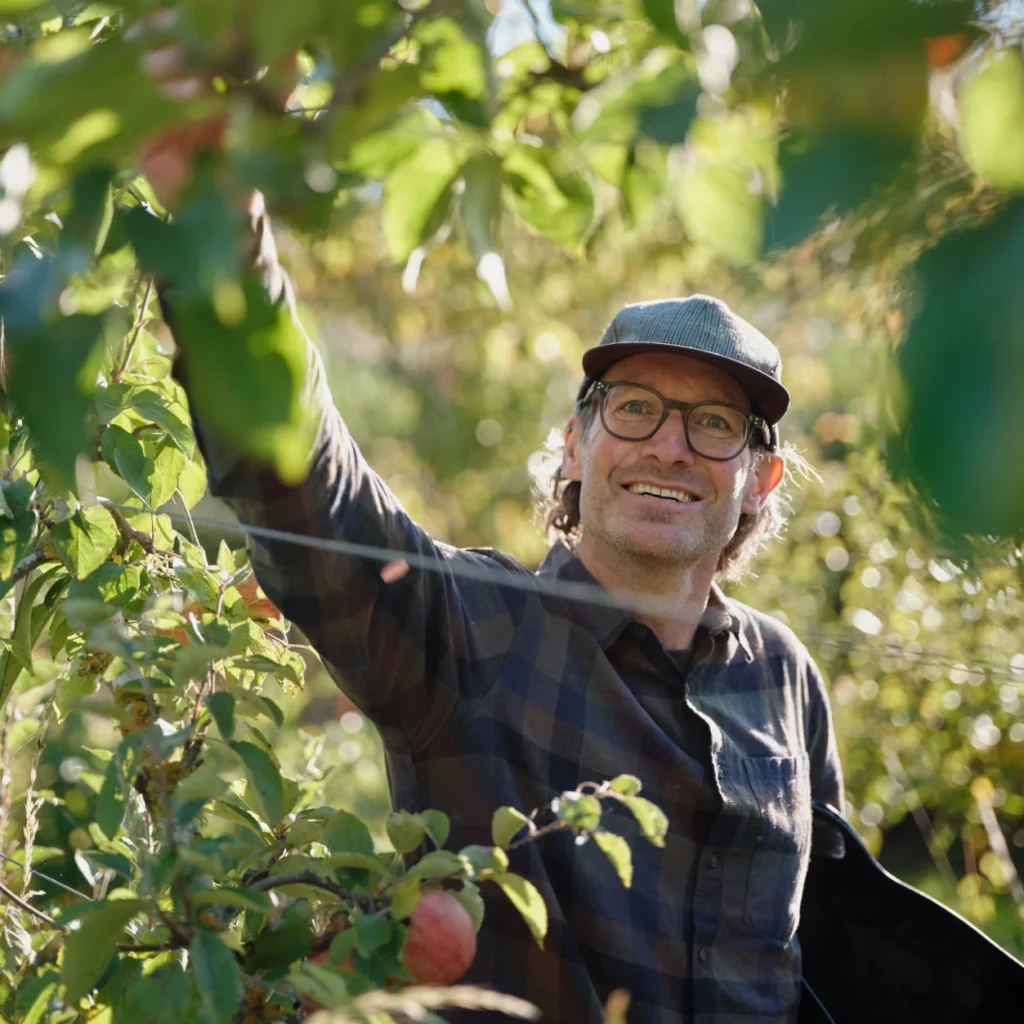
Jason Ross
Jason lives with his family in Waitati, Coastal Otago on a quarter acre food laden paradise. He is passionate about making food growing accessible for all! His business is ‘Habitate’, a landscape nursery growing plants for rich and diverse edible landscapes, many of which he permaculture designs for his clients. With a Fine Arts degree and decades of hands-on horticulture experience, Jason blends creativity with a deep love of nature to create thriving, resilient food gardens and educational seasonal calendars and books, his latest being ‘Homegrown Fruit: a Practical Guide’.
Permaculture Roots & Global Activism
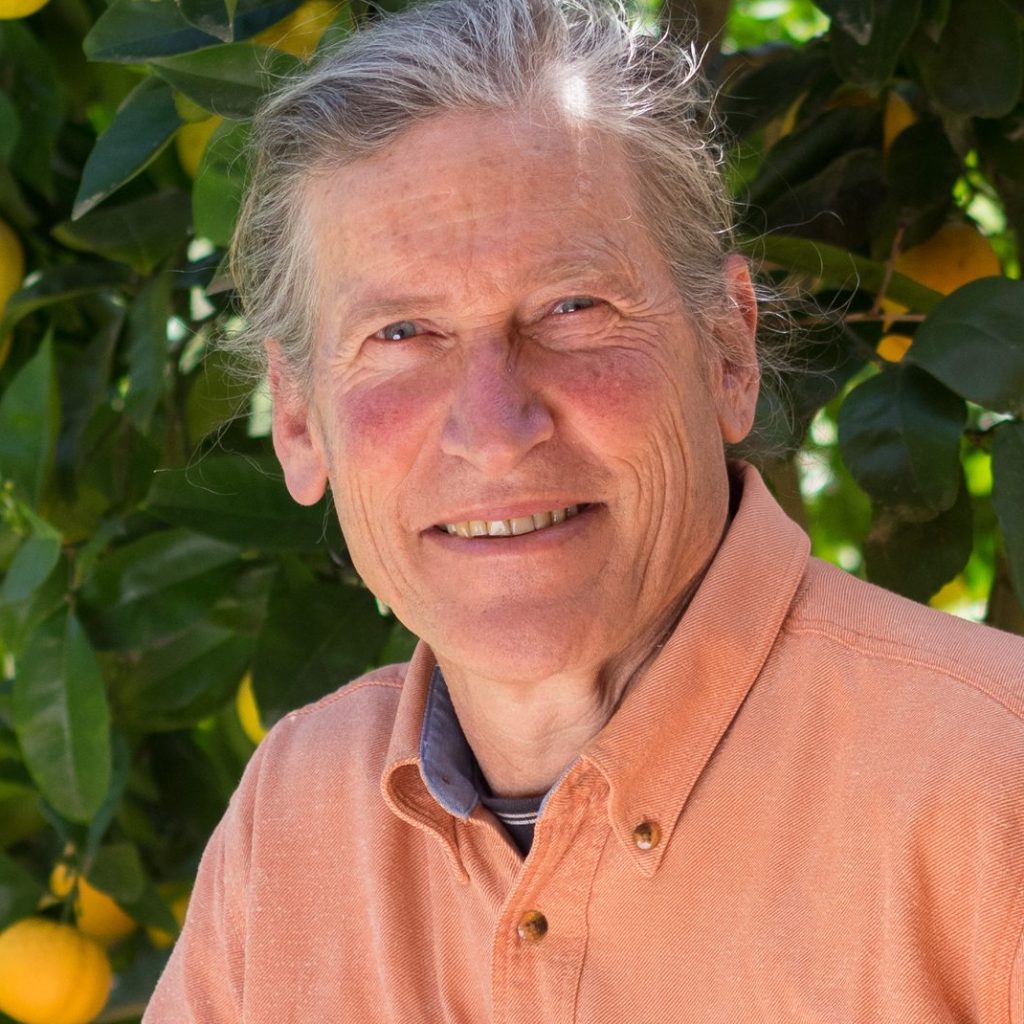
David Holmgren
David is best known as the co-originator of permaculture. In 1978, he and Bill Mollison published Permaculture One, starting the global permaculture movement. Since then, David has developed three properties, consulted and supervised on urban and rural projects, written eight more books, and presented lectures, workshops and courses in Australia and around the world. His writings over those three decades span a diversity of subjects and issues, whilst always illuminating aspects of permaculture thinking and living.
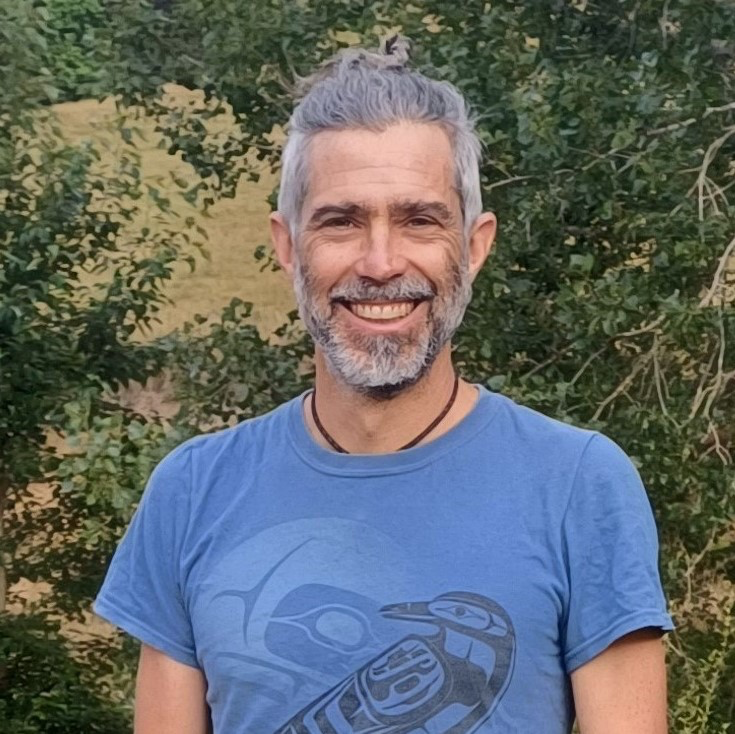
Finn Mackesy
Finn has been actively involved in permaculture in Aotearoa since 2003. As an educator, facilitator and designer he has been involved in a range of initiatives across the motu, focusing on food sovereignty, community development, social innovation, ecological regeneration and empowerment and resilience building. Finn is the co-founder of Aotearoa Permaculture Workshop (APW), Resilio Studio, Dark Green Aotearoa, Grey Lynn 2030, Transition Pt. Chevalier, and Common Ground Community Gardens. As part of his current work with APW to create a new format and approach to permaculture education in Aotearoa, he has spent the last several years researching and documenting the history of permaculture in this land.
Eco-projects, Eco-villages & Land-based Communities
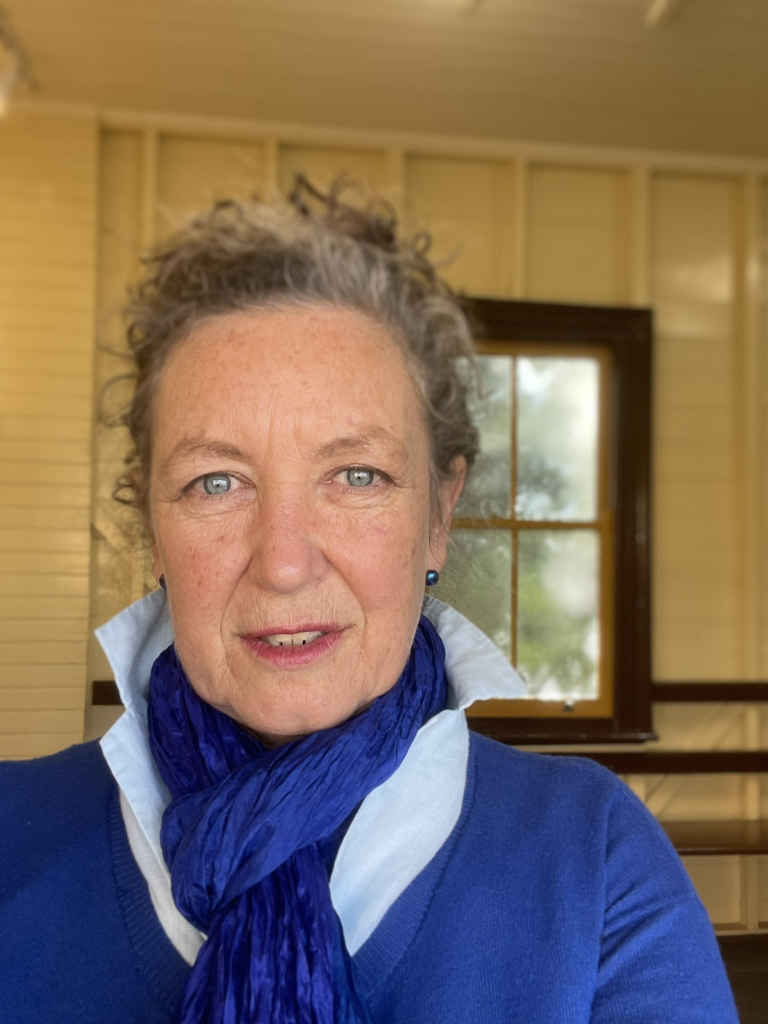
Tanya Mottl
A Global Ecovillage Network (GEN) Ambassador since 2019, Tanya works from the permaculture principle of observe and interact, using theMap of Regeneration, Resilient Communities CardsandThe Collaboration Game to bring experiential learning and play into how communities listen, collaborate and create change together. She is a member of Narara Ecovillage, a 13year old intentional community of 180 cooperative members on the Central Coast of NSW, Australia, where regenerative living is grounded in relationship — with place, people and culture, using sociocratic style governance. Narara is aligning with local Indigenous custodians to integrate living knowledge and co-vision a flourishing future.
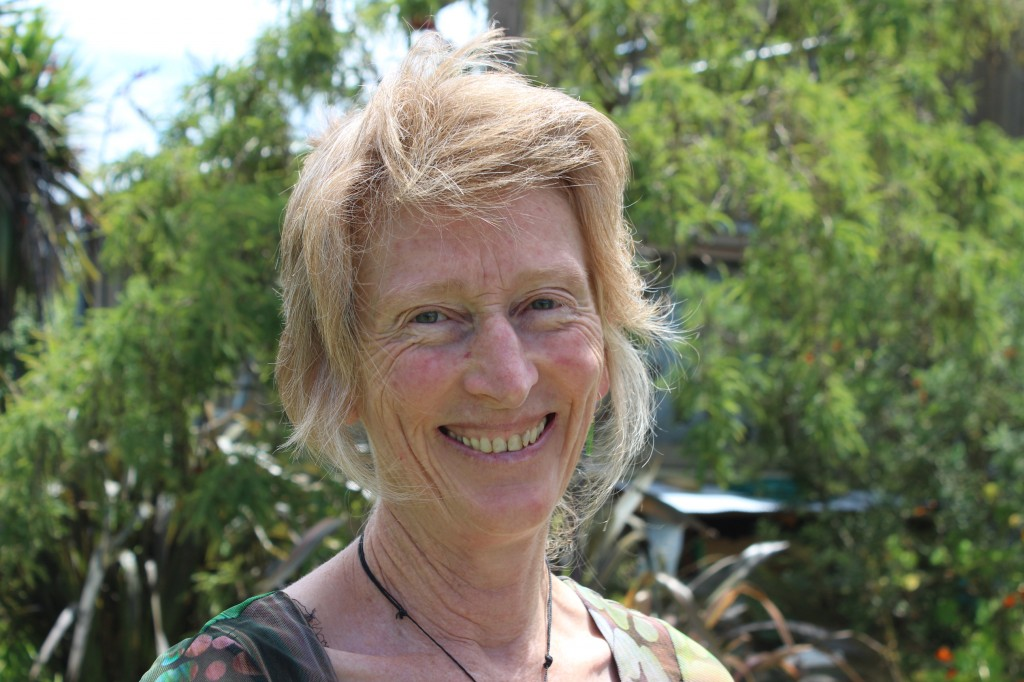
Robin Allison
With her experience in sustainable architecture, Robin initiated Earthsong Eco-Neighbourhood in 1995 – the award-winning cohousing neighbourhood in Ranui, Auckland that models socially and environmentally sustainable urban living. As Earthsong’s project coordinator, she has detailed the collective endeavour of Earthsong’s development in her book, ‘Cohousing for Life’, where she shares both personal and practical elements that created and sustain this innovative housing development. Robin now runs seminars and workshops, writes, consults, and supports other community projects in sustainable living around New Zealand and internationally.
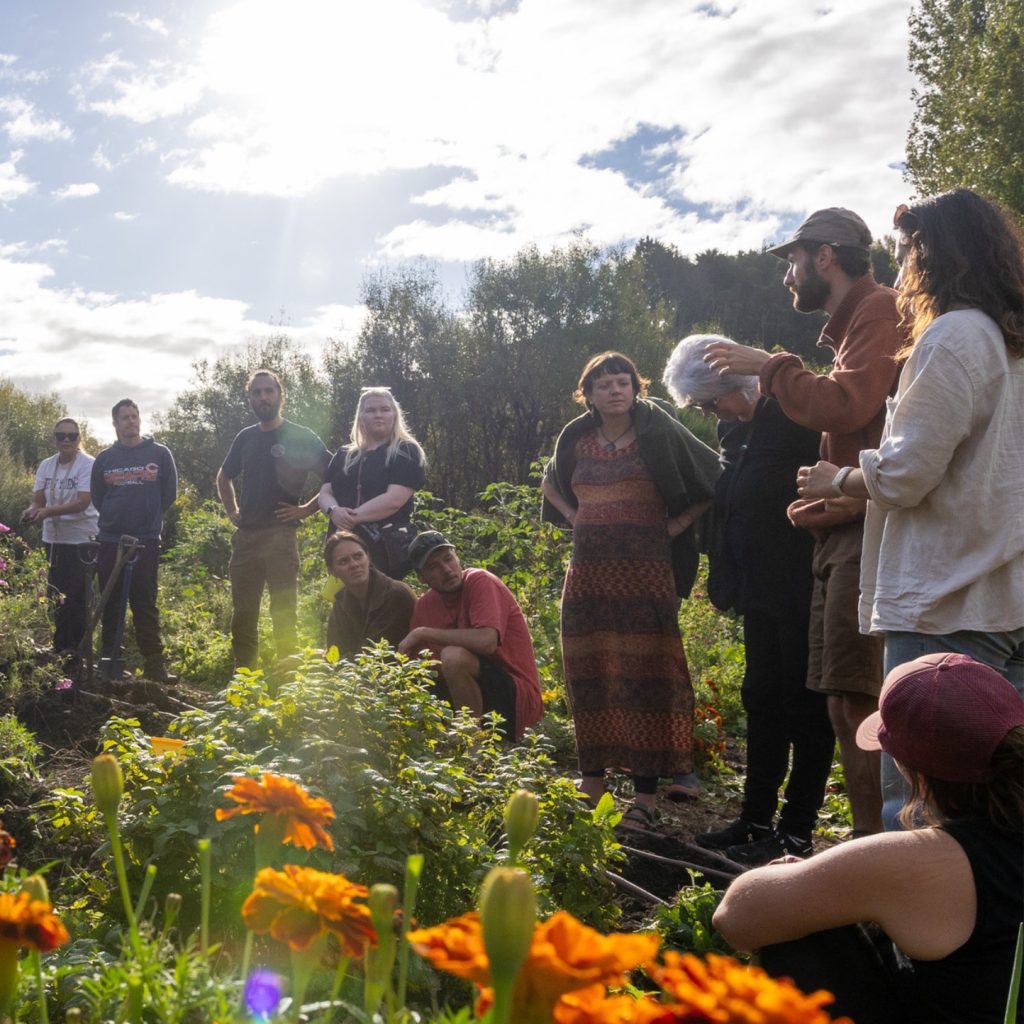
Leo Geddes
Leo is one of the founders of The Learning Environment – a land based charity for community resilience and wellbeing, informed by Permaculture, Hua Parakore and Te Tiriti o Waitangi. Leo has a diverse background in wilderness skills, cultural studies, permaculture food systems design and ecological thinking. He currently coordinates infrastructure development and land maintenance at Pīwaiwaka Forest Farm, The Learning Environment’s home base nested in 72 ha of regenerating bush and river flats alongside the Whanganui River. It is a place of education and wellbeing, as well as fruit orchards, vege and herb gardens, an extensive native tree nursery.
Field Trips
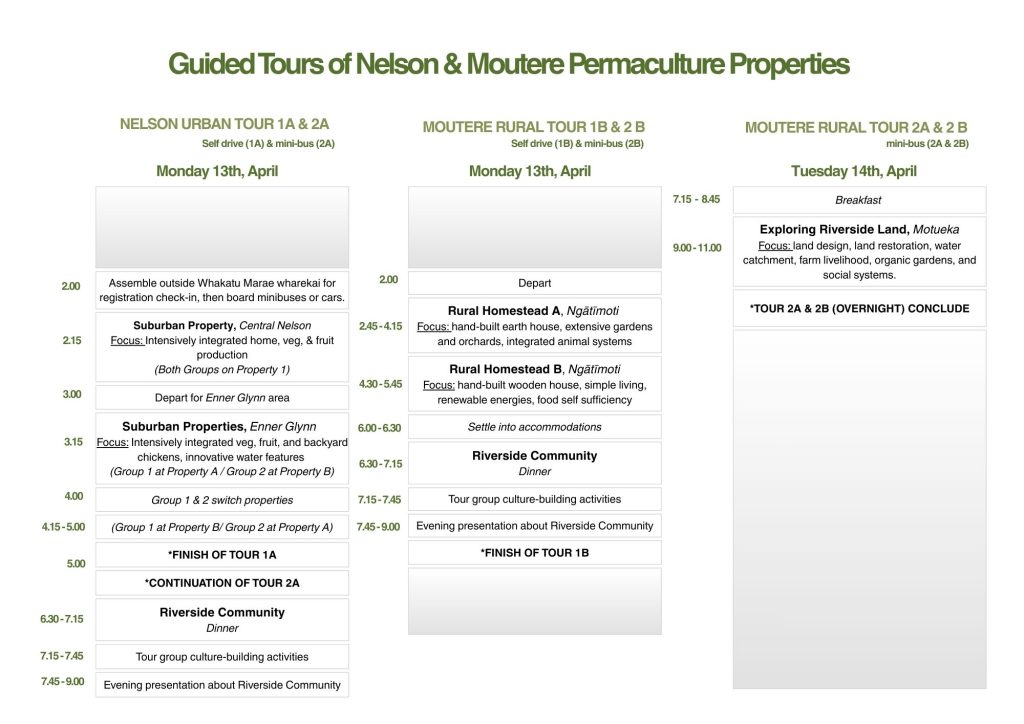
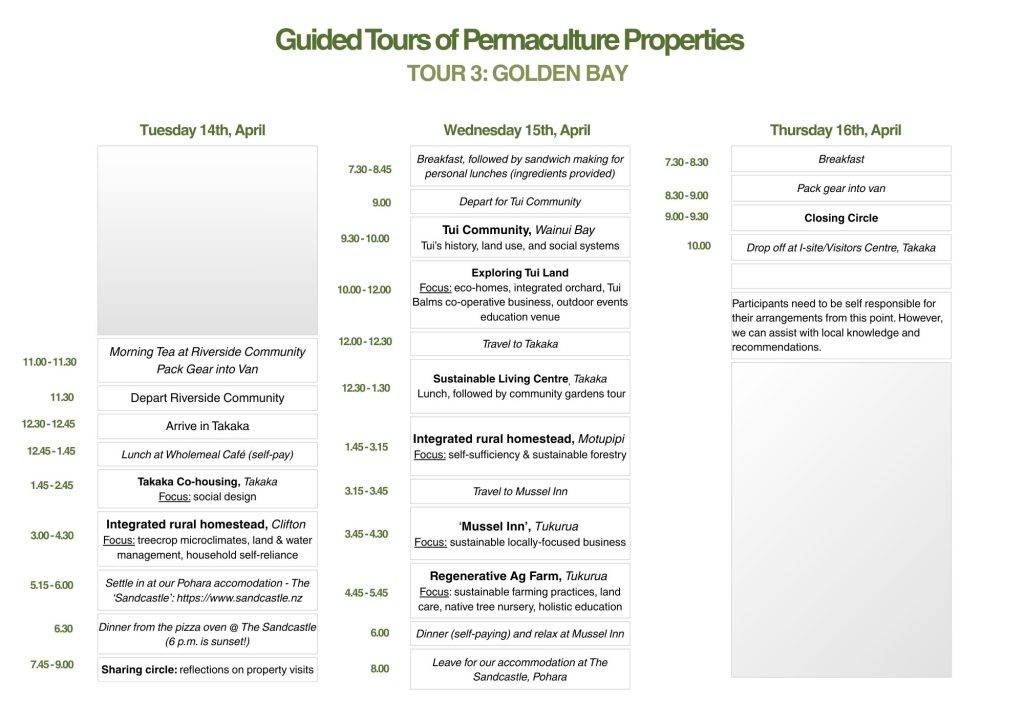
Departing 2pm on 10 April Monday for either Nelson (urban) or Motueka (rural), you choose which. Then staying overnight at Riverside Community in Motueka, and travelling to Golden Bay on Tuesday morning, 14 April, for one or two days (you choose) of field trips. Booking will be separate from the hui, but in tandem with it.
Volunteering (All Spaces Filled)
We have limited work exchange slots (8 for kitchen and a diversity of 8 others). Please apply promptly to ensure you are in for the best opportunity to secure a place.
Your work-exchange all-inclusive ticket includes full attendance, all food and marae accommodation at the hui, but does not include transport, nor participation in the tours following the hui.
Stall Application
At every hui we try to offer the opportunity to sell your products so if you would like to have a stall at the Hui please fill in this form.
Our criteria for endorsing stalls is that permaculture ethics and principles stand behind what you are promoting and/or selling.
There is no specific charge for having a stall, however at the end of the hui, please contribute 10% of your sales, either in cash to the Stalls Co-ordinator (to be banked into the PiNZ account), or action a direct deposit within a week of the completion of the hui.
For more information and to apply, visit: https://forms.gle/YFGiFePPEqYVJBt68